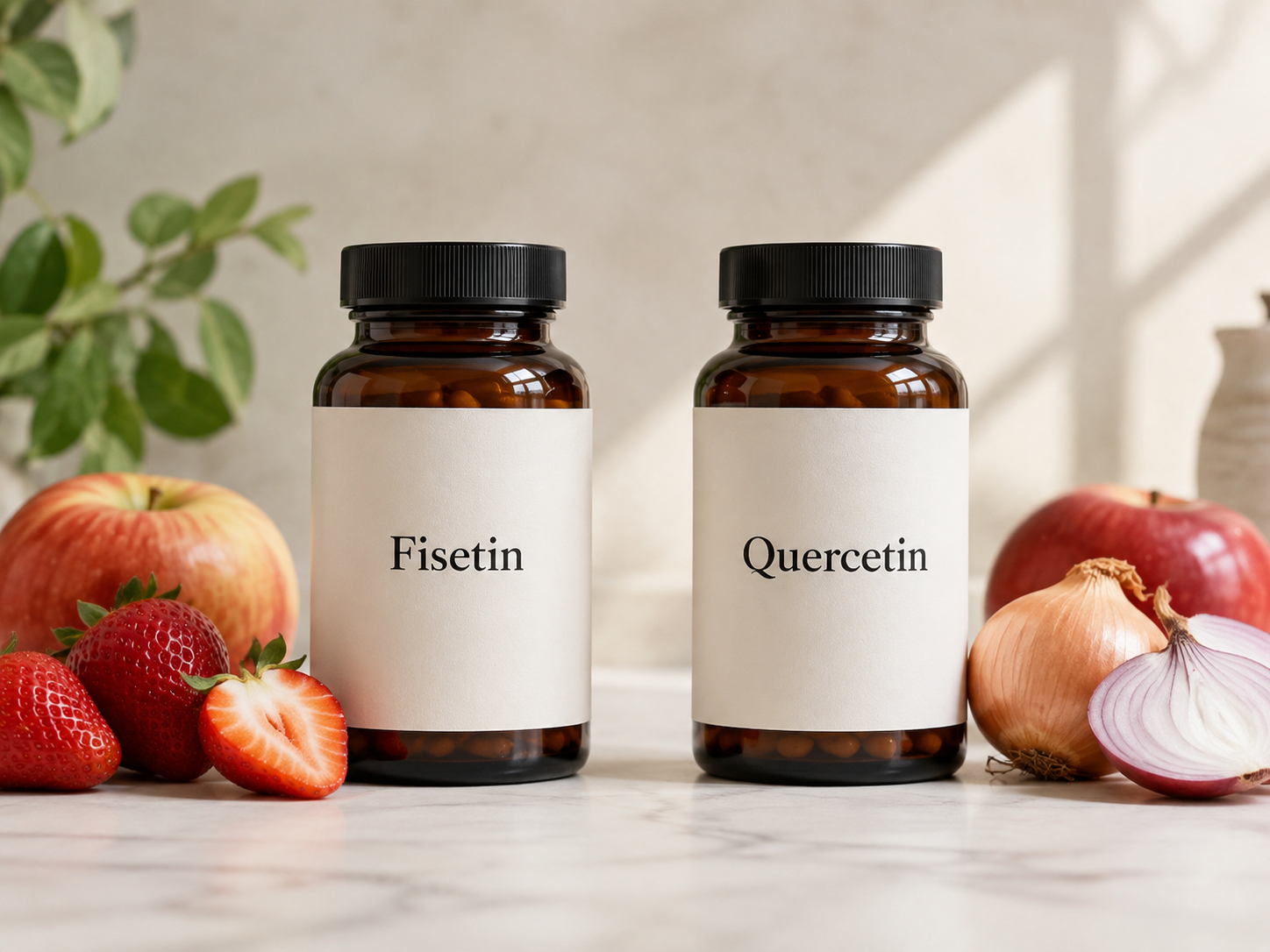
Fisetina vs quercetina
Esta página foi criada para uma busca próxima da compra sobre Fisetina vs quercetina. A resposta útil não é repetir uma lista genérica de benefícios, mas separar o que pode ser verificado no rótulo, o que vem da pesquisa e o que ainda é uma alegação comercial. Para comparar produtos com responsabilidade, analise dose, tamanho da porção, formulação, testes, COA, preço, advertências e a relação entre o produto final e a evidência publicada.
Fazer a avaliação celular ReCellenceResposta rápida: esta página é um guia de decisão de compra. Compare rótulo, porção, visibilidade de testes, contexto de preço e correspondência com evidências antes de decidir por um único destaque.
Use o mesmo padrão para os dois lados
Em Fisetina vs quercetina, os dois lados precisam do mesmo nível de exigência. Compare mecanismo com mecanismo, estudo humano com estudo humano, dose com dose e qualidade comercial com qualidade comercial. Muitas vezes não existe um vencedor universal porque os ingredientes respondem a perguntas biológicas diferentes.
Mecanismos diferentes não formam um ranking
O fato de dois ingredientes atuarem em vias diferentes não significa que um seja automaticamente mais forte. Em Fisetina vs quercetina, utilidade depende do objetivo, maturidade da evidência, formulação e tolerabilidade.
Como usar esta página
Use este guia como filtro de decisão. Primeiro descarte produtos que não deixam claro o ingrediente ou a dose. Depois compare testes, formulação, preço e qualidade das alegações. Por fim, veja se a evidência citada se aplica ao ingrediente, a uma formulação específica ou ao produto final. Em Fisetina vs quercetina, essa ordem reduz o risco de escolher por uma única cifra ou por uma promessa de mecanismo e ajuda a comparar opções com o mesmo padrão.
Comece pelo produto real, não pelo destaque de marketing
Ao comparar Fisetina vs quercetina, o maior número ou a frase mais chamativa não deveria decidir a compra. Comece pelo produto real: quantidade ativa por porção, número de cápsulas, forma do ingrediente, coingredientes, fabricante, instruções e documentação de qualidade. Um rótulo pode ser tecnicamente correto e ainda ser pouco útil se não deixar claro quanto corresponde a cada dose ou se esconder quantidades em blends. Um bom guia transforma esses campos em uma lista verificável em vez de premiar o marketing mais agressivo.
A evidência precisa combinar com a alegação
A pesquisa sobre fisetina e senolíticos inclui estudos celulares, animais, mecanismos e um conjunto mais limitado de estudos em humanos. Esses níveis de evidência não são equivalentes. Um resultado pré-clínico pode justificar interesse científico, mas não prova que um suplemento comercial produzirá o mesmo resultado em uma pessoa. Em Fisetina vs quercetina, pergunte qual tipo de estudo sustenta cada alegação, qual dose e formulação foram usadas, quem foi estudado e qual resultado foi medido.
Transparência é uma característica comercial
Dois produtos podem divulgar o mesmo ingrediente e ainda diferir muito na facilidade de auditoria. Dose clara, porção explícita, fabricante identificável, documentos de teste, COA visível e preço atual reduzem incerteza. Transparência não prova eficácia clínica, mas ajuda a saber o que está sendo comprado e quais partes da história do produto podem ser verificadas. Em Fisetina vs quercetina, isso importa porque muitas decisões são tomadas com campos ausentes ou alegações sem conexão clara com o lote e a fórmula vendidos.
O que significa teste de terceiros
A frase “testado por terceiros” só é útil quando existe contexto suficiente. Pergunte o que foi testado, qual laboratório realizou o teste, se o documento corresponde ao lote atual e se cobre identidade, potência, contaminantes ou outros parâmetros relevantes. Um selo sem detalhes é mais fraco que um relatório atual e rastreável. Em Fisetina vs quercetina, testes devem ser avaliados junto com rótulo, origem do ingrediente e qualidade das alegações, não como prova automática de eficácia.
Preço precisa de um denominador
Preço por frasco é uma comparação fraca quando produtos têm doses, porções ou formulações diferentes. Uma comparação melhor normaliza custo por porção ou por quantidade ativa quando os produtos são realmente comparáveis. Mesmo assim, o menor custo por miligrama não é automaticamente a melhor compra. Em Fisetina vs quercetina, valor deve ser lido junto com transparência, testes, formulação, evidência e conveniência. A meta é mostrar trade-offs, não fabricar um vencedor universal.
Como ler o Evidence Match
Evidence Match pergunta o quanto o produto comercial se parece com o material realmente estudado. Uma cápsula simples com quantidade declarada costuma ser mais fácil de relacionar à literatura do ingrediente do que um blend complexo com muitos ativos e doses pouco claras. Isso não torna fórmulas simples sempre superiores. Significa que, em Fisetina vs quercetina, quanto maior a distância entre produto, dose ou formulação e o que foi pesquisado, maior deve ser a cautela ao transferir resultados para o produto final.
A complexidade do stack aumenta as perguntas
Uma fórmula com vários ingredientes pode ser conveniente, mas cada ativo adicional traz dúvidas sobre dose suficiente, sobreposição, interações, tolerabilidade e evidência da combinação completa. Estudos de um ingrediente isolado não validam automaticamente uma fórmula com cinco ou dez compostos. Em Fisetina vs quercetina, complexidade deve ser descrita de forma neutra: pode trazer conveniência, mas também aumenta a carga de prova e dificulta saber qual componente explica um efeito ou reação.
“Senolítico” e “antiaging” não são certificações
Senolítico descreve uma área de pesquisa; não é uma certificação regulatória que demonstre que um suplemento remove células senescentes em humanos. “Antiaging” também é amplo demais para funcionar como desfecho clínico. Em Fisetina vs quercetina, desconfie de promessas de reversão de idade, “remoção de células zumbis”, tratamento de doenças ou regeneração garantida. Linguagem mais confiável identifica composto, tipo de estudo, população, dose e resultado medido.
Os dados da Fase 3 dão contexto de mercado
O banco de dados da Fase 3 do Senolytic Report acompanha 21 produtos atuais de fisetina e senolíticos. Ele separa doses verificadas, preço quando disponível, formulação, testes, COA, transparência, valor, Evidence Match e complexidade do stack. O objetivo não é transformar dados comerciais em ensaio clínico, mas tornar diferenças visíveis. Em Fisetina vs quercetina, campos não verificados continuam como não capturados em vez de serem preenchidos por suposição.
Páginas relacionadas
Perguntas frequentes
O que devo verificar primeiro?
Quantidade ativa por porção, forma do ingrediente, porção, testes, advertências e fabricante.
Dose maior significa produto melhor?
Não. Dose é apenas uma dimensão entre formulação, testes, segurança, evidência e valor.
Qual a utilidade de um COA?
Ajuda na rastreabilidade quando corresponde ao produto ou lote atual e mostra métodos e resultados relevantes.
Teste de terceiros prova eficácia?
Não. Controle de qualidade e eficácia clínica são perguntas diferentes.
Posso usar dose de estudo como dose pessoal?
Não. Protocolos de pesquisa não são instruções universais.
Estudos em animais provam resultado humano?
Não. Evidência pré-clínica apoia hipóteses, mas não estabelece efeito clínico humano.
Mais ingredientes tornam a fórmula melhor?
Não necessariamente. Mais ingredientes aumentam a complexidade e a necessidade de doses transparentes.
Devo comparar apenas preço por frasco?
Não. Compare porções, quantidade ativa, formulação, testes e qualidade da informação.
Essas comparações podem mudar?
Sim. Estudos, fórmulas, preços, testes e COAs podem mudar uma conclusão.
Quando falar com um profissional de saúde?
Se você tem condição médica, usa medicamentos, está grávida ou considera doses altas, busque orientação qualificada.