Buying 98% High-Purity Fisetin: Verify the Number
A purity percentage is useful only when you know what was tested, how it was measured and whether the documentation belongs to the actual product batch.
Keyword dataset: 160 searches/month · KD 10 · Transactional
Take the ReCellence Cellular Assessment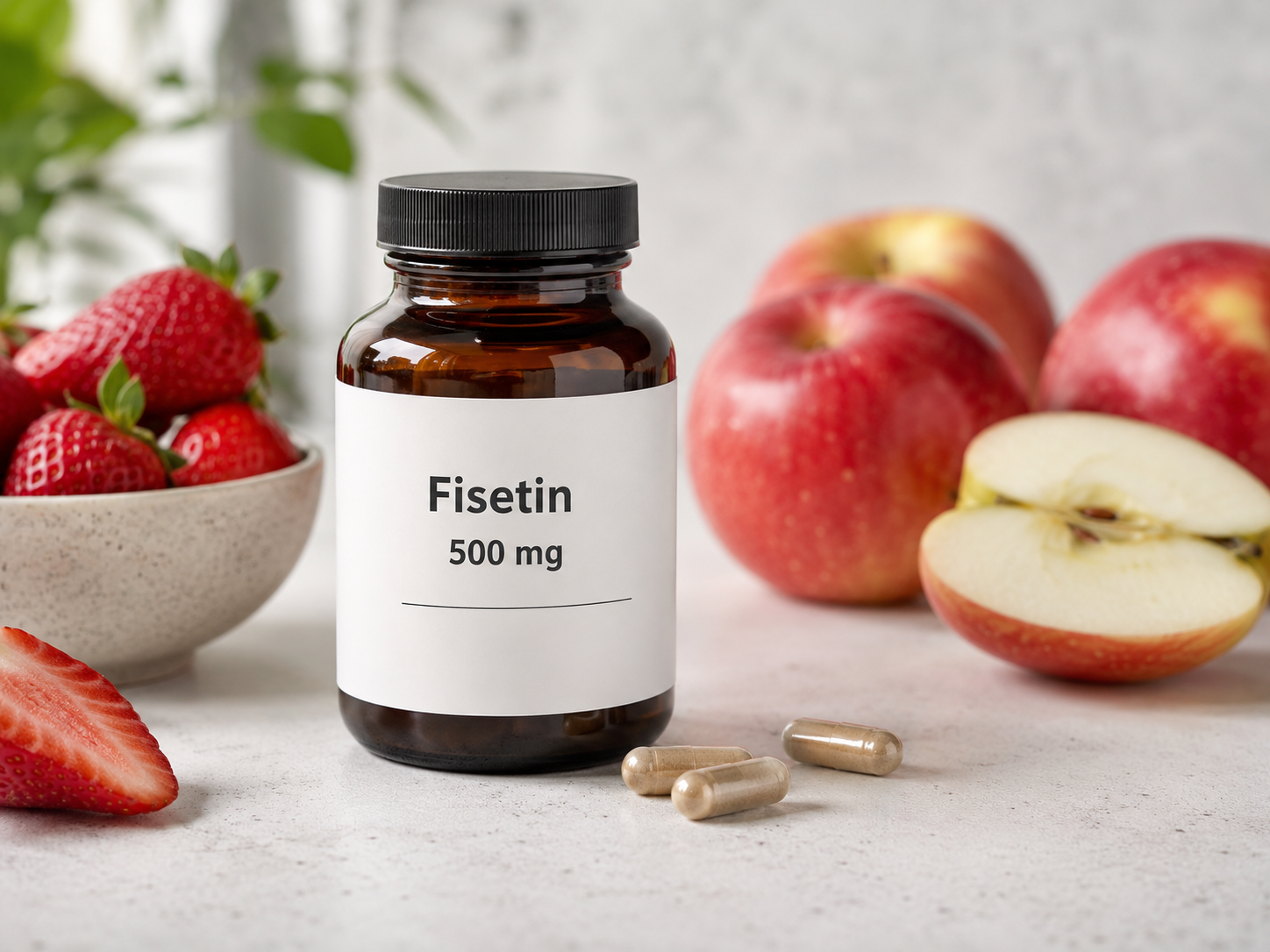
Quick answer: this page is a buyer decision guide. Compare the exact label, serving basis, testing visibility, price context and evidence match before treating one headline feature as decisive.
What “98% purity” should mean
Purity claims generally refer to the proportion of the tested material identified as the target compound under a specified analytical method. A front-label percentage without a test method, laboratory context or batch connection is weaker evidence than it appears.
| Claim | Verification question |
|---|---|
| 98% fisetin | Is there a batch-specific certificate or analytical report? |
| Third-party tested | Which lab and which tests? |
| Pharmaceutical grade | What recognized specification is being referenced? |
| High potency | How many mg of fisetin are actually present per serving? |
Purity is not the same as clinical efficacy. Continue with where to buy fisetin and fisetin capsule selection.
Frequently Asked Questions
Does 98% purity mean the supplement is 98% effective?
No. Purity is a chemical-quality concept, not a measure of clinical effectiveness.
What is a COA?
A Certificate of Analysis can document test results for a material or batch. Its usefulness depends on authenticity, methods and whether it matches the product being sold.
Is higher purity always better?
Purity matters, but it should be evaluated alongside identity, contamination testing, formulation and appropriate use.
What should I verify before buying this type of fisetin product?
Confirm the exact fisetin amount, serving size, other ingredients, seller identity, testing information and warnings.
Does 'third-party tested' always mean the same thing?
No. Look for details about what was tested, by whom and whether the documentation matches the product or batch.
Is the highest purity percentage automatically the best product?
No. Purity is useful, but identity, contamination controls, formulation and appropriate use also matter.
Should I compare price per bottle or per serving?
Price per serving and per stated active amount are generally more useful than bottle price alone.
Are marketplace ratings enough to verify quality?
No. Reviews can describe user experience but do not replace product documentation or analytical testing.
What label claims are red flags?
Be cautious with guaranteed anti-aging, disease-treatment, cartilage-regeneration or 'removes zombie cells' promises.
Can a delivery technology justify a higher price?
Only if the formulation, evidence and quality information provide a credible reason for the premium.
Research references
- Yousefzadeh et al. (2018): fisetin senotherapeutic activity in preclinical models and human tissue
- Zhu et al. (2017): fisetin senolytic activity varies by senescent cell type
- ClinicalTrials.gov NCT06431932: pilot pharmacokinetic study of fisetin in healthy volunteers
- ClinicalTrials.gov NCT03675724: fisetin pilot study in older adults
- Lee et al. (2024): small human pilot; authors caution against anti-aging use until larger studies
What this page should help you decide
Fisetin is a flavonoid found in foods such as strawberries and is widely discussed in longevity research because of preclinical work on cellular senescence. Commercial Fisetin products, however, vary substantially in dose, source, formulation, testing, and how aggressively they translate early-stage research into claims. For a search such as “Buying 98% High-Purity Fisetin: Verify the Number,” the user is usually close to a product decision. The useful answer is therefore not another generic summary of the ingredient, but a framework for deciding which product characteristics materially change the purchase.
The product fields that matter most
A practical Fisetin comparison should start with the stated amount per serving, capsule count, ingredient source, formulation, testing documentation, visible COA availability, price per usable dose, and whether the finished product is a focused single ingredient or part of a broader stack. Product pages usually emphasize the easiest marketing claim rather than the field most useful to buyers. A strong guide starts with facts that can be checked and compared.
How to read claims without being misled
Red flags include presenting animal lifespan findings as human outcomes, using the word “senolytic” as if it were a regulatory or clinical certification, hiding the actual Fisetin amount behind blends, and treating larger doses as automatically superior. Confidence should increase when a claim names the exact ingredient form, dose, study population, and measured outcome. Confidence should fall when a page jumps from pathway language to promises about disease, lifespan, or biological-age reversal.
How Phase 3 changes this page
SenolyticReport Phase 3 adds a larger source-backed commercial database rather than relying only on narrative reviews. Product records capture Fisetin dose, current price where available, formulation, third-party testing, COA visibility, serving structure, and stack complexity. Missing fields remain missing rather than being filled with assumptions.
Transparency is a meaningful product feature
Two products can contain the same headline ingredient and still differ dramatically in how easy they are to audit. Clear dose, visible batch documents, testing disclosure, serving size, ingredient form, and current price reduce uncertainty. They do not prove efficacy, but they make a commercial product easier to evaluate.
How to interpret the Fisetin Value Score
The Fisetin Value Score is designed for products with enough verified dose and price information to support a cost comparison. It should not be read as an efficacy score. A cheap product can have weak transparency, and an expensive product can still lack finished-product evidence.
How to interpret Evidence Match
Evidence Match asks how closely a commercial product resembles the thing actually studied. A focused Fisetin capsule with a disclosed amount maps more cleanly to Fisetin research than a complex proprietary stack, even if the stack contains several fashionable longevity compounds.
Why stack complexity matters
Stack Complexity is descriptive rather than inherently positive or negative. A simple formula is easier to evaluate, while a multi-ingredient stack may be more convenient for someone who wants broader coverage. Complexity increases the burden of proof because more components create more dosing and interaction questions.
Price is only one part of value
Bottle price alone is a weak comparison. Useful value analysis considers the amount of active ingredient, number of servings, formula transparency, testing, and whether the product contains meaningful co-ingredients or merely decorative label complexity.
What would make the recommendation change
A recommendation should change when the market or evidence changes. New human studies, reformulations, price changes, new COAs, discontinued products, or improved testing documentation can all shift the comparison. Static “best” lists that never change are usually less useful than they look.
Practical checklist before buying
Before purchase, verify the current label, active amount, serving size, formulation, testing documents, warnings, price, refund terms, and whether the seller is the manufacturer or a third-party marketplace. If the product is being considered alongside prescription medication or for a medical condition, professional medical input belongs in the decision.
Update trigger 1
For Buying 98% High-Purity Fisetin: Verify the Number, the conclusion should remain open to revision. New human studies, formula changes, updated COAs, price changes, and newly disclosed testing can all alter the commercial recommendation. The useful goal is not to create a permanent winner, but to make the comparison transparent enough that readers can see why the conclusion was reached and what evidence would change it.