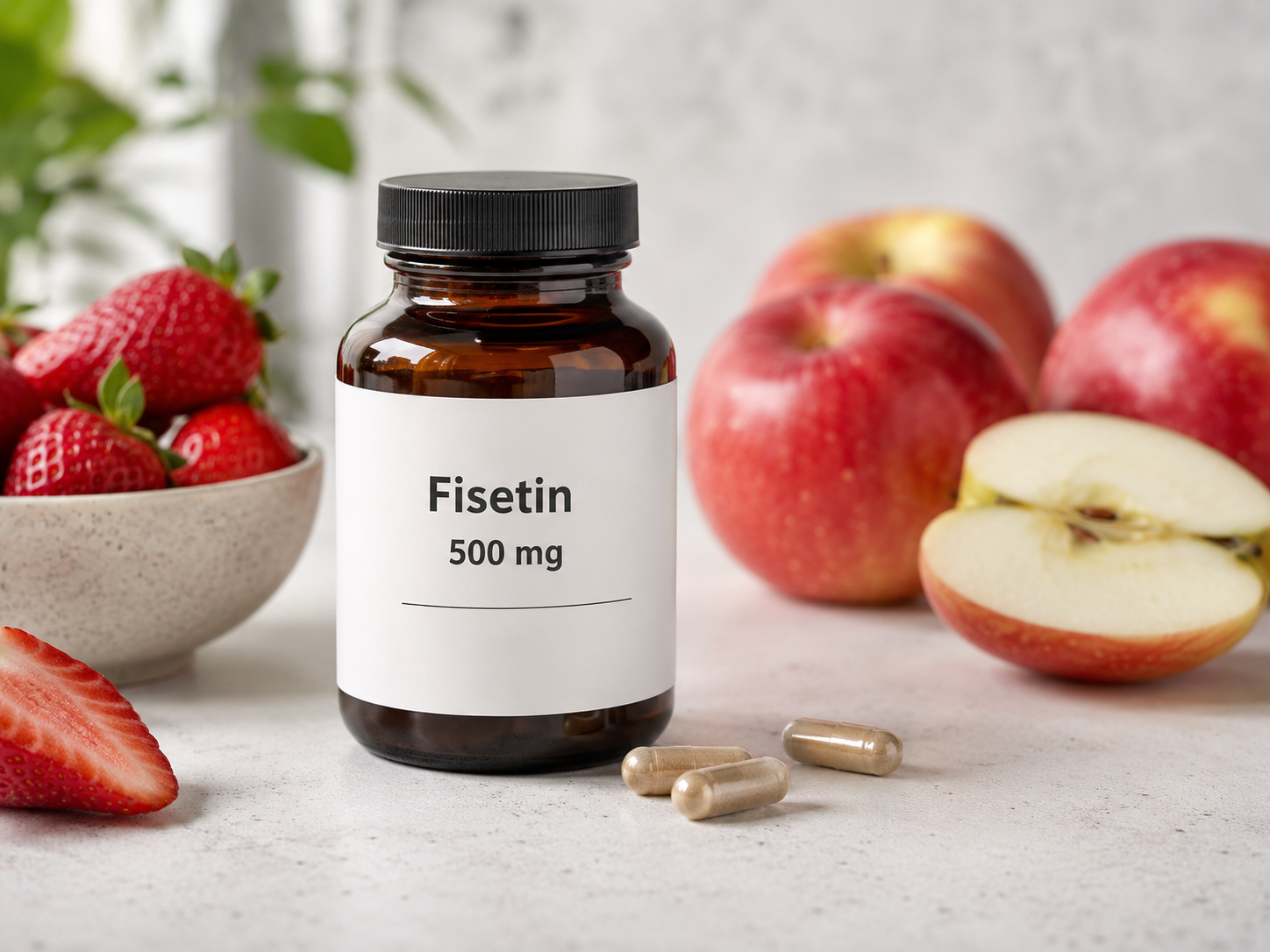
Fisetina 100 mg en dosificación por pulsos: un protocolo de investigación no es una dosis personal
Esta página está diseñada para una búsqueda cercana a la compra sobre Fisetina 100 mg en dosificación por pulsos: un protocolo de investigación no es una dosis personal. La respuesta útil no es repetir una lista genérica de beneficios, sino separar lo que puede comprobarse en la etiqueta, lo que procede de la investigación y lo que sigue siendo una afirmación comercial. Para comparar productos de forma responsable, conviene revisar dosis, tamaño de porción, formulación, pruebas, COA, precio, advertencias y la relación entre el producto final y la evidencia publicada.
Realizar la evaluación celular de ReCellenceQué significa la cifra de la etiqueta
En una búsqueda de dosis como Fisetina 100 mg en dosificación por pulsos: un protocolo de investigación no es una dosis personal, la cifra debe leerse junto con la base de la porción. Compruebe si la cantidad corresponde a una cápsula, dos cápsulas, una dosis diaria o una mezcla completa. Una cifra de investigación tampoco se convierte automáticamente en recomendación personal. Los protocolos publicados pertenecen a un diseño, población y duración concretos. El comprador puede usar esos números como contexto para entender el producto, pero no como instrucciones clínicas universales.
Más miligramos no equivale automáticamente a mejor
Una cantidad mayor puede cambiar coste, número de cápsulas y exposición, pero no garantiza mayor absorción, seguridad o beneficio. Para Fisetina 100 mg en dosificación por pulsos: un protocolo de investigación no es una dosis personal, compare primero qué sustancia se está midiendo, la pureza, el tamaño de porción y la evidencia de esa formulación. Las diferencias de entrega, como liposomal o sistemas de absorción, también deben evaluarse por separado en lugar de asumir que una etiqueta más compleja resuelve la incertidumbre.
Cómo interpretar la Correspondencia con la Evidencia
La métrica Evidence Match pregunta en qué medida el producto comercial se parece a lo que realmente se estudió. Una cápsula sencilla con cantidad declarada suele ser más fácil de relacionar con investigación sobre el ingrediente que una mezcla compleja con muchos activos y dosis poco claras. Esto no significa que una fórmula simple sea siempre superior. Significa que, para Fisetina 100 mg en dosificación por pulsos: un protocolo de investigación no es una dosis personal, cuanto más se aleja el producto del material, la dosis o la formulación investigados, mayor debe ser la cautela al trasladar resultados científicos al producto terminado.
La complejidad de una combinación aumenta las preguntas
Una fórmula con varios ingredientes puede ser cómoda, pero cada ingrediente adicional introduce preguntas sobre dosis suficiente, solapamiento, interacciones, tolerabilidad y evidencia de la combinación completa. Los estudios de un ingrediente individual no validan automáticamente una fórmula que contiene cinco o diez compuestos. En Fisetina 100 mg en dosificación por pulsos: un protocolo de investigación no es una dosis personal, la complejidad debe describirse de forma neutral: puede aportar conveniencia, pero también aumenta la carga de prueba y hace más difícil saber qué componente explica un posible efecto o un efecto adverso.
Las palabras “senolítico” y “antiaging” no son certificaciones
El término senolítico describe un área de investigación; no es una certificación regulatoria que demuestre que un suplemento elimina células senescentes en humanos. Del mismo modo, “antiaging” es una categoría de marketing demasiado amplia para funcionar como resultado clínico. Para Fisetina 100 mg en dosificación por pulsos: un protocolo de investigación no es una dosis personal, conviene desconfiar de promesas de reversión de edad, “eliminación de células zombis”, tratamiento de enfermedades o regeneración garantizada. El lenguaje más fiable nombra el compuesto, el tipo de estudio, la población, la dosis y el resultado medido.
Los datos de Fase 3 añaden contexto de mercado
La base de datos de Fase 3 de Senolytic Report registra 21 productos actuales de fisetina y senolíticos. Separa dosis verificadas, precio cuando está disponible, formulación, pruebas, COA, transparencia, valor, correspondencia con la evidencia y complejidad de la combinación. El objetivo no es convertir una base comercial en un ensayo clínico, sino hacer que las diferencias entre productos sean visibles. Para Fisetina 100 mg en dosificación por pulsos: un protocolo de investigación no es una dosis personal, los campos no verificados permanecen como no capturados en lugar de completarse con suposiciones.
Qué puede hacer cambiar la conclusión
Una recomendación responsable no debe ser permanente. Nuevos estudios en humanos, reformulaciones, cambios de precio, nuevos COA, cambios en las pruebas o la retirada de un producto pueden modificar la comparación. Por eso Fisetina 100 mg en dosificación por pulsos: un protocolo de investigación no es una dosis personal debe revisarse como una fotografía fechada del mercado y de la evidencia. Una página que nunca cambia aunque cambien las fórmulas y los datos probablemente está optimizada para conservar un ranking, no para conservar precisión.
Lista práctica antes de comprar
Antes de comprar un producto relacionado con Fisetina 100 mg en dosificación por pulsos: un protocolo de investigación no es una dosis personal, verifique la etiqueta actual, cantidad activa por porción, forma del ingrediente, número de porciones, otros ingredientes, documentos de pruebas, advertencias, precio, política de devolución y quién vende realmente el producto. Si está considerando dosis altas, protocolos inusuales, combinaciones con varios suplementos, o si toma medicamentos o tiene una enfermedad, la decisión debe incluir orientación sanitaria cualificada. Un artículo de compra puede organizar preguntas; no puede sustituir una evaluación médica individual.
Cómo usar esta página
Utilice esta guía como un filtro de decisión. Primero descarte productos que no permitan identificar claramente el ingrediente o la dosis. Después compare pruebas, formulación, precio y calidad de las afirmaciones. Por último, revise si la evidencia citada corresponde al ingrediente, a una formulación específica o al producto terminado. Para Fisetina 100 mg en dosificación por pulsos: un protocolo de investigación no es una dosis personal, este orden reduce el riesgo de dejarse llevar por una sola cifra o por una promesa mecanística y ayuda a comparar opciones con el mismo estándar.
Empiece por el producto real, no por el titular
Cuando un comprador compara Fisetina 100 mg en dosificación por pulsos: un protocolo de investigación no es una dosis personal, la cifra más grande o la frase más llamativa no debería decidir la compra. El punto de partida es el producto real: cantidad activa por porción, número de cápsulas, forma del ingrediente, coingredientes, fabricante, instrucciones y documentación de calidad. Una etiqueta puede ser correcta y aun así resultar poco útil si no deja claro qué cantidad corresponde a cada toma o si utiliza una mezcla que impide comparar ingredientes. Una guía de compra sólida convierte esos campos en una lista verificable en lugar de premiar el marketing más agresivo.
Páginas relacionadas
Preguntas frecuentes
¿Qué debo comprobar primero?
Empiece por la cantidad activa por porción, forma del ingrediente, tamaño de porción, pruebas, advertencias y fabricante.
¿Una dosis mayor significa un producto mejor?
No. La dosis es solo una dimensión junto con formulación, pruebas, seguridad, evidencia y valor.
¿Qué valor tiene un COA?
Puede mejorar la trazabilidad si corresponde al producto o lote actual y muestra métodos y resultados relevantes.
¿“Probado por terceros” demuestra eficacia?
No. Las pruebas de calidad y la evidencia de eficacia responden a preguntas diferentes.
¿Puedo usar un protocolo de estudio como dosis personal?
No. Los protocolos de investigación pertenecen a poblaciones y diseños específicos y no son instrucciones universales.
¿La evidencia en animales demuestra resultados en humanos?
No. La evidencia preclínica apoya hipótesis, pero no establece por sí sola un efecto clínico humano.
¿Son mejores las fórmulas con más ingredientes?
No necesariamente. Más ingredientes aumentan la complejidad y la necesidad de dosis transparentes y evidencia de la combinación.
¿Debo comparar solo el precio del frasco?
No. Compare porciones, cantidad activa, formulación, pruebas y calidad de la información junto con el precio.
¿Pueden cambiar estas comparaciones?
Sí. Nuevos estudios, fórmulas, precios, pruebas y COA pueden cambiar una conclusión comercial.
¿Cuándo debo hablar con un profesional sanitario?
Si tiene una enfermedad, toma medicamentos, está embarazada o considera dosis altas o protocolos inusuales, busque orientación cualificada.